Unless you work in one, the emergency room is never where you hope to be. Doctors outside of the emergency department work hard to keep their patients from needing a visit, but regardless of their speciality, experts agree that during a true medical emergency, the ER is the best place for a patient to be.
Fortunately, with some self-education and preparation, some ER visits can be avoided, says Dr. Alex Heromin, Director of Urgent and Home Care at the Atria Health and Research Institute location in South Florida.
Our physicians shared some of the things they wish more people knew, as it might help them respond to—or even prevent—a medical emergency. They also shared some of the things they’d never do at home, because the risks are far too great. (DIY electricians, please keep reading.)
CPR basics
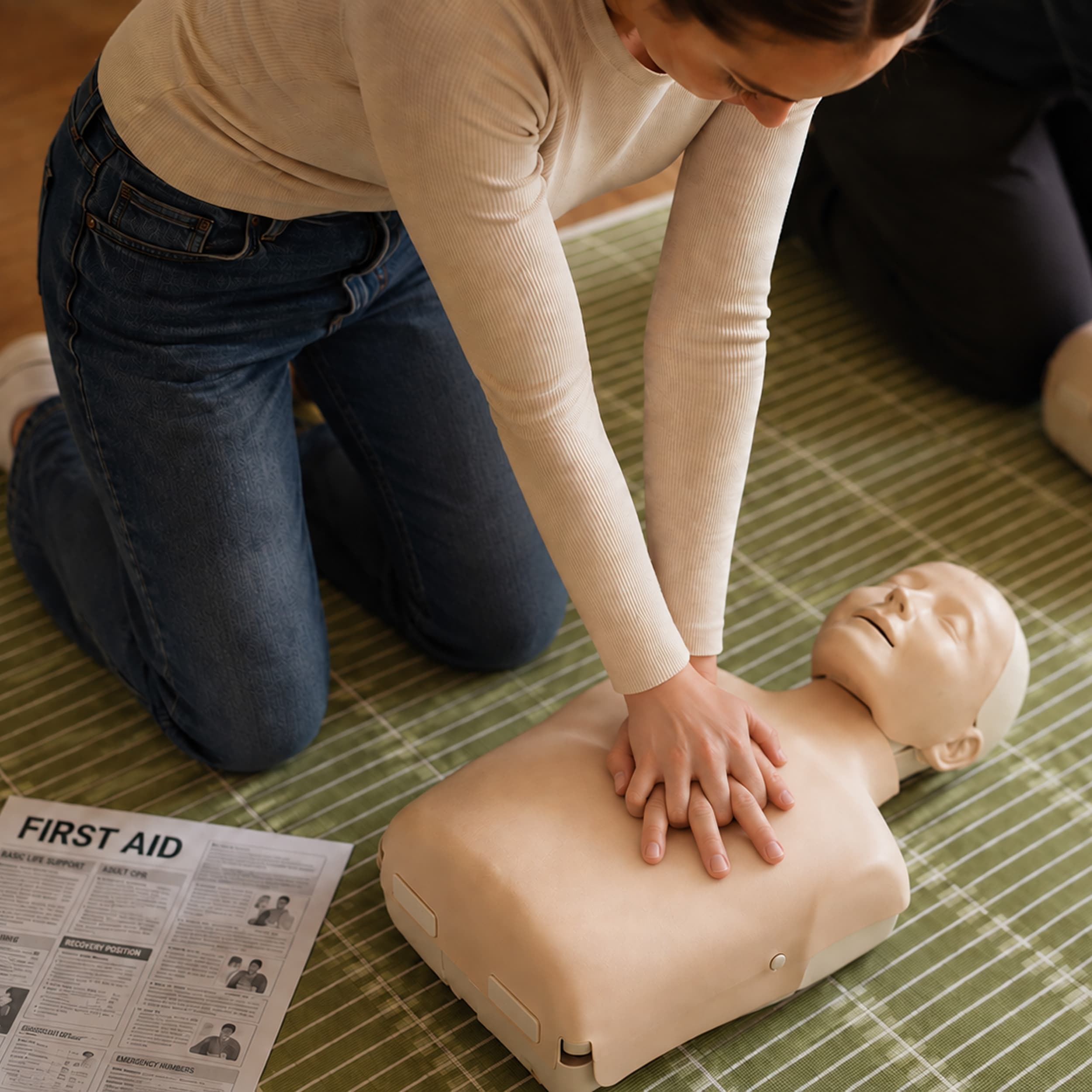
"You don’t need a medical degree to save a life. Sometimes, you just need to know what to do for the first five minutes," says Dr. Heromin. And if cardiopulmonary resuscitation, or CPR, makes you think of going mouth-to-mouth with a stranger, Dr. Heromin notes that most cardiac arrests happen at home to family and friends. When it does, you have two immediate steps to take. One is to call 9-1-1. The other is to start chest compressions right away. “With cardiac arrest, minutes matter,” he says.
“The chances of survival can double or triple when CPR is started immediately,” Dr. Heromin says, noting that many cases require hands-only CPR. “You often don't even need mouth to mouth,” he says “Just firm, fast chest compressions."
The timing is important. In a memorable coincidence, “Stayin’ Alive” by the Bee Gees provides the perfect rate of 102 beats per minute; that’s a good rhythm to deliver 100-120 chest compressions per minute. They should be delivered 30 compressions at a time, with a pause to provide 2 rescue breaths. (If you cannot provide rescue breaths, you should still pause before continuing compressions.)
CPR can be useful in places you wouldn’t necessarily associate with cardiac events, such as a golf course—the fifth most frequent location for cardiac arrests outside of the hospital. Even more common is cardiac arrest within the home, at a hotel, or in a public place.
Basic life-saving skills
- According to the Centers for Disease Control and Prevention, roughly one in 10 people in the United States will experience a seizure in their life—so it’s likely that you may encounter someone who needs help.
Signs that someone is experiencing a seizure include staring into space, confusion, uncontrollable shaking, and sudden loss of consciousness. In these cases, you’ll want to make sure the person is safely on the ground, not standing or sitting. You’ll roll them onto their side to keep their airway open, and you will not put anything in their mouth—it is impossible for a person to swallow their tongue, though it remains a very persistent myth, says Dr. Heromin. If the seizure lasts more than five minutes, you should call 9-1-1.
- Our experts also recommend we all get familiar with STOP THE BLEED®, a program that teaches people how to treat gunshot victims by applying direct pressure, packing wounds, and creating a tourniquet, critical steps that can keep someone alive until emergency services arrive.
- Consider keeping Naloxone, a medication sold under the brand name Narcan, in a purse or backpack. Narcan is an FDA-approved treatment to quickly reverse an opioid overdose—an unfortunately common occurrence in the United States. It’s available over-the-counter and is delivered as a nasal spray.
Everyone can benefit from more education on what to do during emergency medical situations. Preparing for these situations isn’t an invitation for chaos, but a cushion that could help you, a loved one, or even a stranger. Like an airbag, you hope to never need it—but you would hate to be without it should the need arise.
“The medicine is the easy part,” says Dr. Nicholas Caputo, Director of Urgent and Home Care at Atria’s New York location. The hard part as a bystander is having the courage and confidence to step in and act.
What emergency medicine doctors say they’d never do
“A lot of accidents and trauma are preventable,” says Dr. John Kim, Director of Home Services at Atria in Los Angeles. Some activities are inviting an accident—like operating an ATV after drinking, or hitting the skatepark without protective gear.
And while kids love jumping on trampolines, Dr. Kim does not share in the enthusiasm. Avoid them if you can, he advises, noting that from 2009 to 2018, more than 800,000 kids sustained trampoline injuries in the United States, ranging from broken bones to concussions.
Pool safety is also critical: Atria clinicians recommend the “swiss cheese model.” While swiss cheese has holes in it, when you layer multiple pieces of cheese on top of each other, those holes get covered. So while no method is perfect, if you combine a few methods at the same time, everyone is more likely to be safe. Combine adult supervision with firm rules about never going in the pool without an adult around, fences with self-closing doors around the pool, and keeping toys out of the pool when it’s not swim time, so kids don’t feel tempted to jump in.
Less exciting activities can also be unsafe: cleaning up broken glass with his bare hands is not something Dr. Kim would do.
“There’s a good chance you’ll cut yourself,” he says. “Just sweep it up.”
Our experts also tend to avoid working on their day off—specifically electrical work. Accidentally touching a live wire can lead to significant burns, and even cardiac arrest.
When you’re in the ER
If you do find yourself in the emergency room, Dr. Caputo finds it helpful to remember how they operate, and what can make your time there just a little bit smoother.
“The ER might seem chaotic,” says Dr. Caputo, “but there is a method to the madness.” The more medical information you can provide, the better the ER can help you.
Remember that you can be persistent while still being kind. If you feel like something is wrong and not being addressed, you should advocate for yourself or your family while remaining respectful.
If you are worried about a specific issue, tell the doctors. Naming your specific concern can be useful for multiple reasons: if you’re concerned that a symptom might be the sign of a specific disease, tell your doctor. They might be able to tell you that you don’t need to be concerned about that specific issue, or it may provide a clue that leads to better care.
“ERs are set up to deal with the sickest patients first,” says Dr. James Salway, an urgent care doctor for Atria in New York. “If you aren’t being seen immediately, it isn’t because you aren’t important, it’s likely because there are other people who are sicker,” he says.
In other words: if the hospital staff thinks you’re healthy enough to wait, you have something to be grateful for.
“If you come into the ED and I jump out of my chair,” Dr. Caputo says, “that means you’re really sick.”
The bottom line
Even if you take every recommended precaution, you can’t always avoid the emergency room. But educating yourself on life-saving skills will equip you to help those around you when an emergency arises. And knowing how to navigate an ER will ensure you or your loved ones receive the appropriate care.