The science
When you step on an old-school bathroom scale, you see a single number: your weight.
Many newer models, however, promise to take much more sophisticated readings of your body. They tell you not just your total weight, but also how your body is composed—that is, how much of your weight comes from fat versus lean mass, the catchall term for non-fat tissues including bone, muscle, and organs.
Body composition scales generally work using a technique called bioelectrical impedance analysis. They send a low-voltage, sensationless electrical current through the soles of your feet and into your body, then measure how much resistance that current meets as it travels through you. Fat contains less water than muscle, for example, so the current has a harder time passing through it.
Depending on the particular model, a body composition scale may assess your total weight, body fat percentage, visceral fat (the type of fat collected around internal organs), muscle mass, water weight, and more.
The potential benefits
Knowing your weight, alone, only tells you so much about your health. “Weight—which is the number that is easiest—is helpful on a population level, but really just too crude a metric on an individual level,” says Dr. Daniel Angerbauer, a preventive medicine physician at the Atria Health and Research Institute.
A tall, muscular athlete probably has a relatively high body weight, but that doesn’t mean they’re in poor health. The “Health at Every Size” movement has also questioned the idea that health and weight are inextricably linked. Studies show, for example, that cardiorespiratory fitness and diet quality are often better indicators of health than a simple number of the scale.
All this to say, a raw measurement of weight doesn’t tell the whole story of your wellness. Body composition scales go beyond that number to explore metrics like body fat percentage, which studies suggest is one to have on your radar.
Excess body fat contributes to inflammation and metabolic changes, which are associated with increased risks of chronic diseases such as type 2 diabetes, heart disease, and some forms of cancer. In a 2025 study, researchers concluded that a young adult’s body fat percentage tracks with their risk of dying early, both generally and specifically from heart disease. Body mass index, a more simplistic measurement of weight relative to height, was not as good a predictor of mortality risk.
Your level of visceral fat—the kind clustered around your internal organs—is a more critical indicator of disease risk than your total body fat percentage. Because it functions as an active endocrine organ, releasing hormones and inflammatory substances, visceral fat serves as a primary driver of cardiovascular and metabolic disease. Visceral fat levels are an independent risk factor for and a stronger predictor of cardiovascular events than overall body fat percentage, according to the American Heart Association. Using a body composition scale, rather than one that measures weight alone, can help get a handle on all these different metrics.
“It’s actually common to see a patient who is at a normal weight but with excess visceral fat and low lean muscle mass,” Dr. Angerbauer says. Those patients might not even know this unless they track their body composition.
Monitoring changes in body composition is also a great way to track progress, says Kyle O’Flaherty, DPT, director of movement at the Atria Health and Research Institute. Seeing your body fat (both subcutaneous and visceral) percentage trending down may motivate you to keep eating right and working hard at the gym, for example.
“It can be incredibly frustrating for someone who’s trying to lose weight and they feel the clothes getting looser, but they step on the scale and nothing has moved,” says Christina Schreckengaust, MPH, RD, CMDR, a dietitian at the Atria Health and Research Institute. Body composition scales allow you to see changes that may not be reflected in the narrow measure of body weight.
Usage guidelines
The biggest caveat to keep in mind: Studies show that at-home body composition scales are not perfectly accurate.
These scales provide estimates of body fat percentage rather than direct measurements. Generally, the scales use bioelectrical impedance analysis to estimate the body fat percentage in your lower body—since your feet are generally the only points of contact with the device—then extrapolate that to the rest of your body.
That estimate of body fat percentage is, in turn, used to calculate other data points that your scale may report, like your muscle mass and visceral fat. It’s kind of like a game of telephone. If the initial body fat estimate is skewed by factors like hydration or time of day, the resulting data point, like visceral fat, becomes even less reliable.
If you want or need a highly precise measurement of your body composition, you’re better off scheduling an in-clinic test like a DEXA scan or AMRA, O’Flaherty says.
But that doesn’t mean there’s no reason to use an at-home body composition scale. These devices are still useful for tracking progress and trends, because any inaccuracies tend to be consistent over time. Even if you can’t totally trust the raw number on the scale, you can see if your body fat percentage is going up or down.
O’Flaherty recommends checking your measurements at a consistent frequency, either daily or weekly, and under identical conditions. “If you do it at the same time every morning, for example, chances are that typical ins and outs of eating and bowels and bladder are stabilized,” O’Flaherty says, allowing your true metabolic trends to surface.
That’s important, because something as seemingly minor as drinking water can throw off your scale’s reading, research suggests. Water content determines how much resistance an electrical current meets within your body—so if you’re dehydrated, your scale may overestimate body fat and vice versa.
Should anyone avoid body composition scales?
Body composition scales are quite safe, so there are few physical reasons not to use one. Most of the possible drawbacks have to do with the “mental health consequences of overly obsessing about weight” and body composition, Dr. Angerbauer says. He wouldn’t recommend them for anyone with a history of disordered eating, for that reason.
“I caution its use when it comes to teens, boys or girls, and young adults,” adds Schreckengaust. For young people, she says, teaching the fundamentals of healthy eating and exercise is more important than fixating on numbers on the scale.
Pregnant people may want to pause their readings too, both to be extra-cautious and for the simple fact that readings are even more likely to be inaccurate during this life stage, O’Flaherty says.
Product recommendations
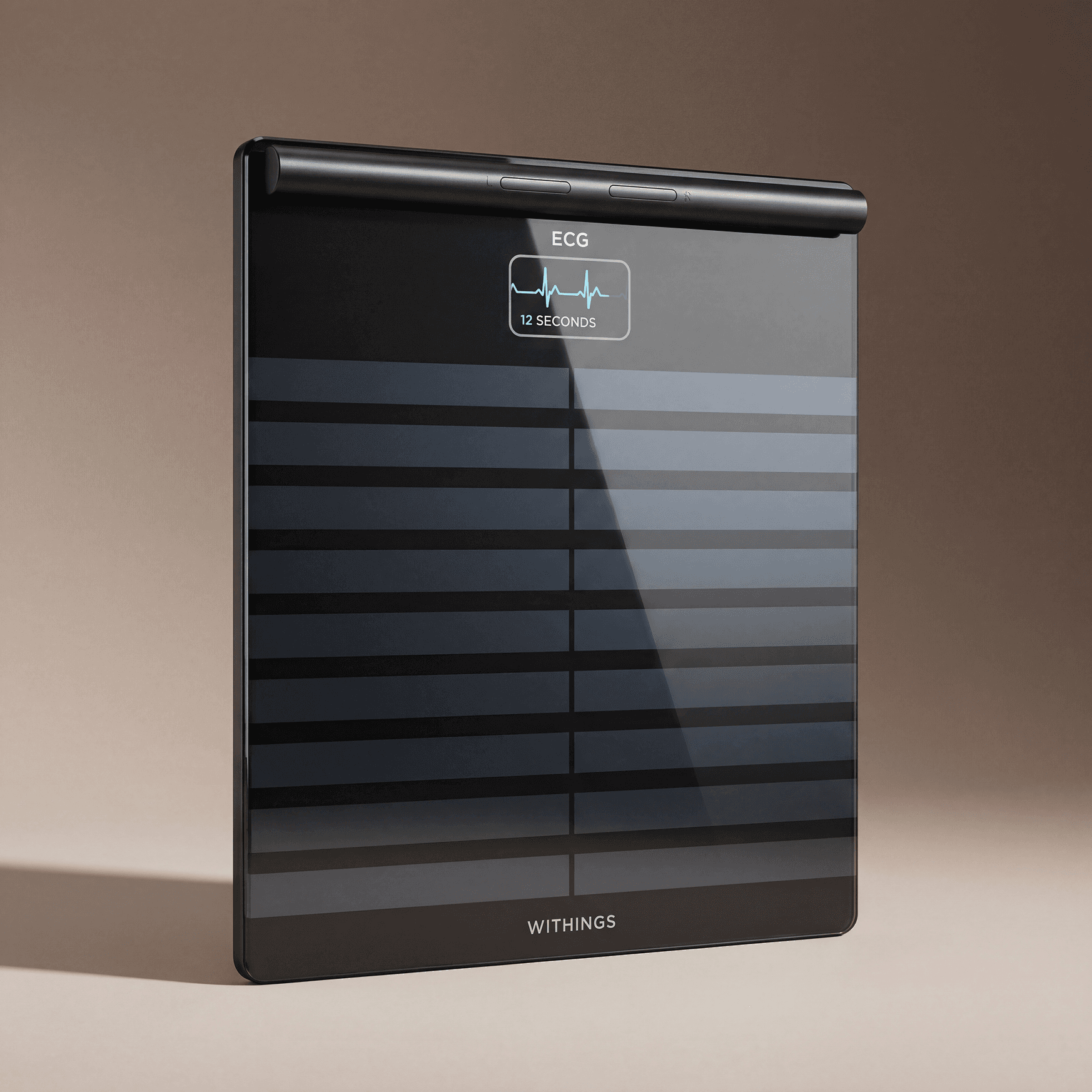
Two-point scales: Two-point scales are those that take measurements based on only two points of contact: your feet. Withings has some good products in this category, O’Flaherty says. They have the added benefit of syncing with Bluetooth, so you can easily store and share your data with your clinical team. Another good—and budget-friendly—option is made by Tanita, Dr. Angerbauer says. “It’s basic. It just gives you weight and body fat,” Dr. Angerbauer says. “Honestly, those are the two most accurate metrics these devices can measure, and for most people, that’s probably sufficient.”
Four-point scales: Four-point scales also include hand grips to improve measurement of the upper body. While they’re still not perfect, they may be a bit more accurate in their body fat and muscle mass estimations thanks to those extra touchpoints. O’Flaherty likes products from InBody, which makes high-tech body composition scales often found in gyms and health care clinics but also has four-point scales intended for in-home use.